
Failing to distinguish between dust control and air testing can lead to severe legal penalties and compliance notices. While control prevents hazards, testing provides the legally defensible proof required by Australian regulators to ensure your site is safe and compliant.
Key Takeaways
- Prevent vs. Verify: Dust control physically reduces airborne particulates, while air testing provides point-in-time laboratory data to prove regulatory compliance
- Mandatory Synergy: Australian laws require both proactive suppression and NATA-accredited testing to meet safety standards and avoid heavy legal fines
- Defensible Evidence: Only formal air testing reports from qualified hygienists satisfy insurers and regulators during audits or air quality disputes
A site manager who considers implementing dust suppression will be able to satisfy legal obligations, but might face a compliance notice if no air testing is conducted. Dust control and air testing are different site assessment methods relevant to construction, demolition, industrial site management, and remediation.
You might consider them to be optional, but according to Australian regulatory bodies, they are not. To avoid getting legal penalties and fines, read this blog to know the key differences between them and compliance needs. This blog will show why both services are mandatory for all sites and properties in Australia.
Dust Control as a Preventative Action
Dust control is a preventative, physical intervention where the active suppression or reduction of particulate emissions occurs before they transform into airborne hazards. Dust is controlled on different sites usually by:
- Chemical dust suppressants (salts, polymers, surfactants)
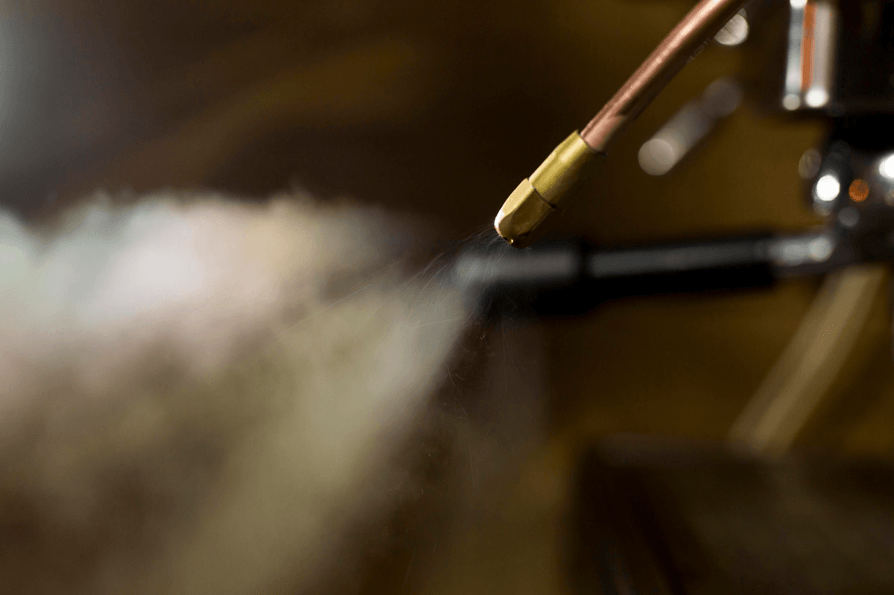
- Water spraying and misting systems
- Physical enclosures and local exhaust ventilation (LEV)
- Vegetation barriers and windbreaks
- Administrative controls (shift rotation, restricted access zones, wet cutting methods)
It is important to understand that dust control is a precondition for safe operations, but it is not the same as proving compliance. It should be combined with air quality monitoring as a continuous/periodic measurement of air contaminant levels in an environment to track changes in air quality.
Air Testing for Point-in-Time Verification and Legal Evidence
Air testing in Sydney and other Australian states is a discrete, laboratory-supported sampling event that produces legally defensible data on airborne contaminant concentrations at a specific point in time. This is typically conducted by a qualified occupational hygienist using NATA-accredited methods in a NATA-accredited laboratory.
For personal exposure monitoring, a device is worn by a worker during a shift. For static or area sampling in a fixed location or site, the method is different. Post-remediation clearance testing that confirms a site is safe before re-occupancy is another method.
Air testing produces a certificate or formal report that air quality monitoring alone cannot offer. This is the document your regulator, insurer, or legal counsel will ask for when there are any air quality issues in your workplace.
Key Differences in Dust Control and Air Testing
Dust monitoring that includes dust control with air monitoring and air testing are different stages of a compliant air management program. Confusing them is not just a semantic error, but also something that can legally expose your site. Here’s how they differ:
| Feature | Dust Control | Air Testing |
| Purpose | Prevent dust from becoming airborne | Formally sample and measure contaminant concentrations at a point in time |
| Function | Proactive/Preventive | Discrete/Verificatory |
| When Is It Applied | Before and during site activities | At defined compliance triggers as a pre-work baseline, during high-risk activities, and post-remediation clearance |
| Governed By | State EPAs and under acts like the Protection of the Environment Operations Act 1997 (NSW) or the Environmental Protection Act 1986 (WA), alongside state CEMPs (Construction Environmental Management Plans) | AS 2985-2009; AS 3640; AS 3580; Safe Work Australia WES (WEL from Dec 2026) |
| Who Performs It | Site supervisors, environmental contractors | Occupational hygienists; NATA-accredited laboratories (non-NATA delivered results are not accepted in any state) |
| Output | Reduced particulate emissions; lower exposure risk | Formal sampling report; clearance certificate; legally defensible compliance evidence |
| Legal Outcome | Demonstrates due diligence (control measures in place) | Demonstrates legal compliance with occupational and environmental exposure thresholds |
| Industry Examples | Water suppression on demolition sites; dust fencing on construction sites | Silica personal exposure sampling in tunnelling; asbestos clearance air testing; post-remediation verification |
Table 1: Dust Control vs Air Testing
Australian Federal Compliance Requirements
Not sure whether you need dust control, air testing, or both? Truth is, you will need both, specifically in high-risk settings where they are complementary obligations. While state laws do apply to site assessment and remediation services, the following are the key regulations to consider:
- Safe Work Australia and WHS Regulations require employers to minimise or eliminate dust exposure and conduct appropriate air monitoring to verify whether those controls are effective
- NEPM (National Environment Protection Measure) enforces national limits with a PM10 annual standard of 25 µg/m³ and PM2.5 standards 20 µg/m³ (24 hours) and 7 µg/m³ annually as per AS 3580
- From December 2026, Australia will adopt the Workplace Exposure Limits for airborne contaminants (WEL list) for all air testing and dust control measures for workplaces, transitioning from the WES list
| Contaminant | Exposure Limit | Standard/Source |
| Respirable Dust (general) | 3 mg/m³ (8-hr TWA) | Safe Work Australia WES; AS 2985-2009 |
| Inhalable Dust (general) | 10 mg/m³ (8-hr TWA) | Safe Work Australia WES; AS 3640 |
| Respirable Crystalline Silica (RCS) | 0.05 mg/m³ (8-hr TWA) | Safe Work Australia WES |
| Asbestos (all types) | 0.1 f/mL (8-hr TWA) | Australian Government Asbestos Safety and Eradication Agency |
Table 2: Federal Dust Exposure Limits
All these requirements apply to both dust control and air testing in all states of Australia. So all workplace buildings and sites need their air quality to maintain these exposure limits while they get their reports tested in NATA-accredited labs.
See also: How to Create a Winning Business Plan
Dust Control & Air Testing Are Different But Not Competing Services
Both of them are sequential layers of a compliant air quality management program. If your site is due for post-remediation clearance or general air testing and air monitoring, or you need guidance on dust monitoring, look for environmental assessment and remediation teams. Getting professional help makes the assessment legally compliant and your site healthy for all!