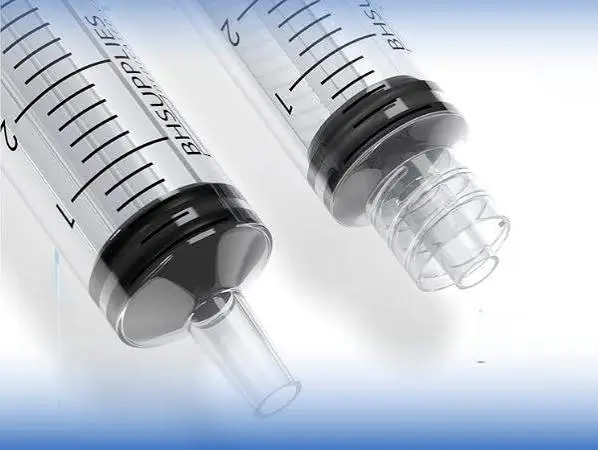

Among the various connector considerations relevant to medical device selection, understanding the distinction between luer slip and luer lock designs represents a foundational piece of knowledge affecting appropriate device selection across numerous clinical applications.
The Fundamental Design Difference
The core distinction between these two connector variants comes down to connection security mechanism: luer slip vs luer lock designs both share the same basic tapered fitting geometry, but luer slip relies purely on friction fit between the tapered surfaces to maintain connection, while luer lock adds a threaded collar mechanism providing additional mechanical security against accidental disconnection.
Clinical Scenarios Favoring Luer Slip Simplicity
Luer slip connections offer the advantage of faster, simpler connection and disconnection, without needing to thread and unthread a locking collar, making this design potentially preferable for applications involving frequent, rapid connection changes where connection security requirements are relatively modest and speed of use carries meaningful practical value.
Clinical Scenarios Requiring Luer Lock Security
Applications involving sustained connections under pressure, situations where accidental disconnection could pose meaningful clinical risk, or scenarios involving patient movement that might otherwise stress a simple friction-fit connection generally favor luer lock designs, since the threaded locking mechanism provides meaningfully greater assurance against unintended disconnection.
Pressure Tolerance Differences Between Designs
Luer lock connections generally tolerate higher pressure applications more reliably than luer slip alternatives, since the threaded mechanism helps maintain connection integrity even under pressure conditions that might otherwise cause a simple friction-fit luer slip connection to separate.
See also: How Billing Consultants Help Behavioral Health Providers Optimize Revenue
Compatibility Considerations Across Connector Types
While luer slip and luer lock components generally share compatible basic tapered dimensions, allowing some cross-compatibility, clinical staff should understand that a luer slip connector attached to a luer lock-designed receiving component won’t provide the threaded locking security that luer lock design is specifically intended to deliver, even though basic connection may be achievable.
Selecting Appropriate Design for Specific Applications
Healthcare facilities and clinical staff should select luer slip or luer lock devices based on genuine application requirements, considering factors like connection duration, pressure involved, movement or handling the connection will experience, and the clinical consequences should accidental disconnection occur, rather than defaulting to one design universally regardless of specific application needs.
Training on Recognizing and Appropriately Using Each Type
Clinical education should help staff confidently distinguish between luer slip and luer lock devices, understanding both the visual and functional differences, along with appropriate technique for each, including proper threading technique for luer lock connections without over-tightening.
Conclusion
Understanding the distinction between luer slip and luer lock connector designs, including their respective advantages and appropriate application contexts, supports informed medical device selection and safe clinical practice. Matching connector type to specific application security and convenience requirements represents an important element of appropriate device selection.
FAQs
Q1: What is the fundamental design difference between luer slip and luer lock connectors? Luer slip relies purely on friction fit for connection, while luer lock adds a threaded collar mechanism providing additional mechanical security against disconnection.
Q2: When might luer slip connections be clinically preferable? Applications involving frequent, rapid connection changes where speed of use matters and connection security requirements are relatively modest may favor luer slip’s simpler operation.
Q3: Why do luer lock connections generally tolerate higher pressure better? The threaded mechanism helps maintain connection integrity even under pressure conditions that might otherwise cause a simple friction-fit luer slip connection to separate.