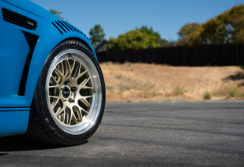

If your new rims rub, the problem is almost never the diameter printed on the box. It is offset, center bore, and the tire you paired with them. A compact sedan can wear 18s, sometimes even 20s, on Oklahoma City streets without a single scrape, as long as somebody measured the car first. Ordering from a photo skips that step. That is why the shops fitting wheels and tires oklahoma city ok drivers commute on every day pull numbers off the vehicle before anything gets ordered. Work the checklist below in that order and the package fits the first time.
Start With Offset and Bore, Not Looks
Offset is the distance between a wheel’s mounting face and its centerline, and it decides whether the tire sits under the fender or out past it. Too little offset and the tire pokes into the fender lip. Too much and it tucks toward the strut. Center bore matters as much, because a hub-centric fit is what carries the weight. Think of hanging a heavy mirror: the bracket on the wall takes the load and the screws only hold it flat. The hub is that bracket, the lug nuts are the screws, and a wheel riding on lug nuts alone will shake at highway speed.
Example plus-size fitment scenario for a compact car or sedan (illustrative; clearance varies by vehicle, so verify against a real fitment guide before ordering).
| Plus-size setup | Wheel width | Offset (ET) | Common clearance issue |
| Stock ~17 in | 7.0 in | ET 45 | Designed clearance, no rub |
| 18 in | 8.0 in | ET 42 | Minor poke; watch the fender lip |
| 19 in | 8.5 in | ET 38 | Lower profile; rubs at full lock if offset is too low |
| 20 in | 9.0 in | ET 35 | Often needs a fender roll or spacer; scrubs over bumps |
The case we see most often is a wheel bought on looks, with an offset ten millimeters off what the car wants. It clears fine in the driveway. Then it scrubs the liner at full lock in a parking garage, and the fender lip settles the argument.
Match Tire Size to Real Clearance
Overall rolling diameter decides clearance, not wheel size by itself. Going up an inch in wheel means dropping sidewall to keep that rolling diameter near stock. Get it wrong and your speedometer reads off, along with everything else watching wheel speed. Ask a wheels and tires Oklahoma City OK shop to pull the factory rolling diameter and stay within roughly three percent of it.
Sensors are the reason it matters now. The CCC Crash Course 2026 report, covered in March 2026, found that 28.3% of repairable collision estimates now include an ADAS calibration. That says plenty about how much hardware sits aimed at the road on an ordinary commuter car. Those systems were tuned around a specific tire circumference. Drift far from it and the car’s own math drifts too.
Plan for OKC Streets, Not Showroom Floors
Low-profile tires look sharp and bruise easily. A 40-series sidewall gives much less cushion than the 55-series it replaced, and pavement here is unforgiving (ask anyone who has replaced a bent 20-inch rim in February). Staying one step less aggressive, 18s instead of 20s on a daily commuter, buys back real sidewall and usually costs less at the next tire change.
See also: How to Create a Winning Business Plan
What the First Month After Install Looks Like
Expect to come back once. Lug nuts settle into a new wheel’s seats, so a retorque in the first week is normal practice rather than an upsell. Watch for a light shimmy between 55 and 70 mph during the first month. It usually means a wheel weight shifted or a tire wants rebalancing.
By month three you know whether the fit is honest. That is about how long it takes to hit every driveway apron and full-lock turn on your normal routes. Then comes the first cold snap. Washington State’s winter driving guide is blunt: 4WD and AWD help a vehicle go, not stop or steer, so on ice you slow down and let tread do the work. A wide summer tire on a big wheel is worse in that weather than the stock setup, and no drivetrain covers for it. If you drive through winter, plan on a true all-season within 90 days of the install.
A Fitment Done Right Lasts for Years
A measured package is boring in the best way. Tires wear evenly, the steering stays quiet, and you stop thinking about the wheels at all. That is the point of checking offset, bore and clearance before the order goes in. Bring the vehicle in, let a shop measure the fender gap and pull your fitment specs. Treat any seller who will not discuss offset as a seller guessing on your behalf. Twenty-inch wheels that fit will outlast eighteens that fight the fender every single day.