
Electronic design has traditionally been built around a simple physical assumption: a circuit board has a fixed shape, components sit on its surface, and the rest of the product is designed around that structure. That approach has worked remarkably well for decades, but modern electronics are increasingly being placed inside products that do not have convenient rectangular spaces. Curved housings, compact wearables, folding mechanisms, miniature sensors, and tightly packed consumer devices are creating situations where the traditional shape of a circuit board can become a design limitation.
The challenge is not necessarily that conventional rigid boards have become inadequate. They remain essential across countless electronic systems because they provide structural stability, established manufacturing processes, and efficient component mounting. The difference is that product designers now have to work with much more varied physical environments. Electronics may need to occupy narrow gaps, travel around corners, connect separate sections, or follow a product’s contours without consuming unnecessary internal space.
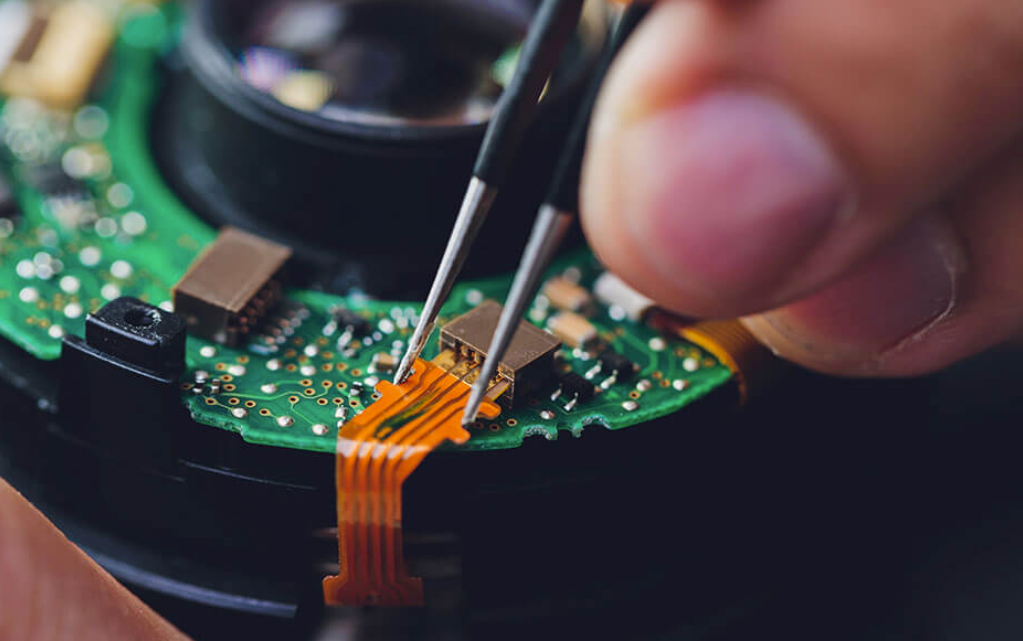
This changing environment has made flexible PCB manufacture an increasingly important part of modern electronic architecture. Flexible circuits allow electrical pathways to be designed around certain physical constraints instead of requiring every component and connection to conform to one rigid surface. That changes the relationship between the circuit and the product, giving engineers another option when a conventional board shape does not fit naturally.
The Rectangle Is No Longer the Only Circuit Shape
For many years, the rectangular PCB was a natural choice because electronic products themselves were often built around rectangular internal spaces.
Today, that assumption is less universal. A device may have rounded corners, curved edges, narrow internal channels, or separate compartments that cannot easily accommodate one continuous rigid board.
Flexible circuits can extend beyond the limitations of a simple rectangle. Their geometry can be designed to route connections through areas that would otherwise require additional cables or separate boards.
The important change is therefore not just physical flexibility. It is the freedom to reconsider the shape of the electrical system itself.
See also: Exploring a Seamless Way to Shop for Home Essentials
Product Geometry Can Influence Circuit Geometry
In conventional development, the circuit board may be designed first and then fitted into the product enclosure.
Modern compact products increasingly require the opposite relationship. The enclosure, mechanical structure, battery, sensors, displays, and other components all compete for limited space.
A flexible circuit can respond to that geometry by following available paths. This can allow electrical connections to work around mechanical components rather than forcing the entire product to accommodate a large flat board.
The circuit becomes part of the spatial planning process.
Curves Become Usable Design Space
A curved section inside a product may be difficult to use with a rigid board but could provide a practical route for flexible circuitry.
This can be useful in devices where the enclosure has been shaped for ergonomics, aesthetics, or mechanical reasons. Instead of leaving curved areas unused, designers can potentially incorporate electrical pathways into them.
The result can be a more efficient use of internal volume without requiring every part of the circuit to be flexible.
Flexible Does Not Mean Uncontrolled
One misconception about flexible circuits is that they can simply be bent into any shape.
In reality, flexibility is carefully engineered. A circuit has mechanical limits, and its design needs to account for bend radius, layer construction, conductive materials, component placement, and expected movement.
A circuit designed for a single installation bend has different requirements from one expected to flex repeatedly during operation.
Understanding this distinction is essential when deciding whether flexibility is appropriate for a particular product.
Rigid and Flexible Sections Can Work Together
A product does not necessarily need to choose between an entirely rigid or entirely flexible architecture.
Hybrid approaches can combine rigid sections with flexible connections. Rigid areas can provide stable platforms for processors, connectors, or other components, while flexible sections can route electrical signals through constrained or curved areas.
This arrangement can offer a practical compromise between structural stability and spatial freedom.
It also allows designers to use flexibility only where it provides a genuine advantage.
Folding Devices Create New Circuit Requirements
Products with moving or folding sections provide an especially interesting use case.
When two parts of an electronic device move relative to each other, the electrical connection between them needs to accommodate that movement. A conventional cable can sometimes perform this role, but it may require additional space and routing.
A properly designed flexible circuit can provide a more integrated connection between the two sections. Its mechanical behavior still needs to be carefully evaluated because repeated folding introduces cumulative stress.
The design challenge is therefore about controlled movement rather than unlimited flexibility.
Smaller Products Need Better Space Management
Miniaturization does not simply mean shrinking every component.
As devices become smaller, designers often need to rearrange components to use internal space more effectively. A battery may occupy a large central area, cameras may need to sit near an external opening, and sensors may need to be positioned in specific locations.
Flexible circuitry can help connect these distributed components without requiring the entire electrical system to remain on one flat surface.
This can make spatial planning more flexible even when the individual electronic components themselves cannot become significantly smaller.
Cameras and Sensors Benefit From Distributed Connections
Modern devices increasingly contain multiple cameras and sensors positioned around their physical structure.
These components may need to sit away from the main processing board because of optical, mechanical, or functional requirements.
Flexible connections can provide a compact route between these locations and the central electronics. This approach can reduce the need for long separate cables in some designs and provide more freedom when placing sensors.
The circuit therefore supports the physical positioning of components rather than dictating where they must be placed.
Automotive Design Rarely Offers Simple Internal Spaces
Vehicles contain electronic systems in many different locations, from dashboards and displays to doors, seats, lighting systems, and sensor assemblies.
These areas can contain mechanical structures, moving parts, limited clearance, and significant environmental variation.
A flexible circuit can be useful where electrical connections need to follow irregular spaces or connect components positioned across different areas.
However, automotive applications also demand careful attention to temperature, vibration, durability, and long-term reliability.
Medical Devices Often Require Unusual Shapes
Medical and health-related electronics can also challenge conventional circuit geometry.
Portable equipment may need to be compact and easy to handle, while wearable systems may need to conform to the body. Sensors can also need to be distributed across a particular area rather than grouped around a single central board.
Flexible circuit structures can support these physical requirements while maintaining the necessary electrical connections.
The design still needs to satisfy the specific reliability and regulatory requirements associated with the device.
Manufacturing Becomes Part of the Design Conversation
Changing the shape of a circuit also changes the manufacturing considerations surrounding it.
Materials need to be selected according to the intended bending conditions. Conductive patterns need to accommodate mechanical requirements, and component attachment needs to remain reliable.
Production processes also need to maintain consistent alignment and quality across the flexible structure.
This means engineers need to think about manufacturability early rather than designing an unusual circuit shape first and considering production limitations afterward.
The Layout Needs Mechanical Awareness
A flexible PCB cannot be designed solely from an electrical perspective.
Trace routing, component locations, bend zones, and connection points all have mechanical implications. Areas expected to experience repeated movement may require different design treatment from stable sections.
This creates a closer relationship between electrical layout and mechanical engineering.
The board’s shape becomes part of its function.
Space Savings Can Come From Better Arrangement
The main advantage of flexible circuitry is not always that it makes the final product dramatically smaller.
Sometimes its value comes from allowing existing space to be arranged more efficiently.
A circuit can pass around a battery, follow a housing edge, connect two separate modules, or occupy a narrow channel that would otherwise be difficult to use.
These small spatial improvements can become significant when a product contains many tightly packed components.
Flexible PCB Manufacture Has to Reflect the Intended Use
The manufacturing approach needs to match how the finished circuit will behave.
A circuit intended to remain mostly stationary requires different mechanical considerations from one designed for continuous movement.
Similarly, a circuit exposed to heat, vibration, moisture, or other environmental conditions needs materials and construction appropriate for those conditions.
This is why flexible PCB manufacture cannot be separated from the application’s mechanical and environmental requirements. The final circuit needs to be produced according to the conditions it is expected to encounter.
Flexible Circuits Can Reduce Dependence on Traditional Wiring
Separate wires remain extremely useful in electronics, but they can create their own space and assembly challenges.
Each cable needs routing, termination, and potentially additional connectors. In a compact product, those requirements can complicate the internal architecture.
Flexible circuits can combine multiple electrical pathways into a structured form, potentially reducing some of the separate wiring required between components.
This can contribute to cleaner internal layouts and more predictable assembly.
The Shape of Electronics Is Becoming More Product-Specific
As devices become more specialized, there is less reason for every electronic system to follow the same physical architecture.
A fitness device may need one shape, a vehicle sensor another, and a medical wearable something completely different.
Flexible circuitry supports this product-specific approach because electrical connections can be designed around the physical requirements of the application.
Instead of starting with a standard board shape and adapting the product around it, engineers can increasingly consider the circuit and product as parts of the same design problem.
Future Electronics May Use Space in New Directions
The continued growth of wearable technology, robotics, compact sensors, automotive systems, and unconventional consumer devices is likely to create more demand for adaptable circuit structures.
Future development may focus on improving reliability under repeated movement, increasing circuit density, simplifying manufacturing, and integrating flexible electronics with other advanced materials.
The objective will not necessarily be to replace rigid PCBs. Instead, electronic systems are likely to use rigid and flexible structures according to the physical demands of each part of the product.
A Broader Shift in Circuit Architecture
The most important change is conceptual.
A circuit board no longer has to be understood exclusively as a flat platform for components. In some products, it can act as a structured electrical layer that moves through the available physical space.
That opens possibilities for devices that would be difficult to design efficiently around conventional board geometry.
The result is a more integrated approach in which mechanical form and electronic architecture can develop together.
Final Thoughts
The traditional rectangular PCB remains one of the most useful structures in electronics, but it is no longer the only practical way to organize electrical connections. Modern products increasingly contain curved surfaces, moving sections, narrow spaces, and distributed components that can challenge a fixed board shape.
Flexible circuits provide designers with another way to approach those conditions. They can route connections around obstacles, follow selected contours, link separate sections, and make better use of otherwise difficult spaces. Their success depends on careful engineering, appropriate materials, controlled bending, and manufacturing processes that match the intended application.
As electronics continue moving into products with more unusual shapes and tighter internal layouts, circuit architecture will increasingly be influenced by physical form. Flexible PCB manufacture is part of that broader shift, allowing engineers to think beyond the traditional flat board and design electrical systems that fit more naturally into the products they support.