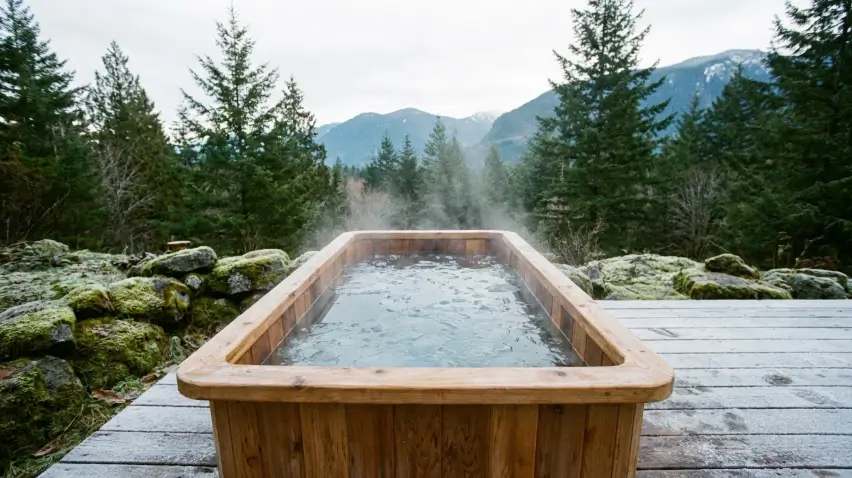

Contrast therapy alternates a hot exposure, most often a sauna, hot tub, or hot shower, with a cold plunge in the 39 to 55 degree Fahrenheit range, typically in 2 to 3 rounds of 8 to 12 minutes of heat followed by 1 to 3 minutes of cold. The evidence for it is real but mixed: cold exposure is associated with faster perceived recovery from fatigue in some trials, while other research suggests it may blunt strength and muscle-building adaptations if used right after resistance training. In a small home setup, a compact plunge next to a shower or a portable heat source can approximate the swing without a full dedicated sauna room.
What Is Contrast Therapy and How Does It Work?
The basic idea is that alternating heat and cold drives repeated vasodilation and vasoconstriction, the widening and narrowing of blood vessels, which some researchers theorize may support circulation and recovery more than either temperature used alone. It is a popular practice among athletes and recovery-focused home users, but it is worth being clear that most of the underlying research studies heat and cold separately rather than in the specific alternating protocol many home setups follow, so the combined effect is more theory-supported than directly proven.
How Cold Should the Plunge Be for Contrast Therapy?
Most home practitioners start in the 50 to 55 degree range, which is cold enough to trigger the physiological response without being so extreme that the exposure has to be cut short from discomfort. Colder ranges, down to 39 to 45 degrees, are typically reserved for people with more cold exposure experience, since a very cold plunge shortens the safe exposure window considerably and increases the risk of an uncomfortable cold shock response for beginners.
How Long Should Each Round Last?
A common home protocol runs 8 to 12 minutes of heat followed by 1 to 3 minutes of cold, repeated for 2 to 3 total rounds, but there is no single research-validated timing that outperforms all others. Shorter cold exposures, even 30 to 60 seconds to start, are a reasonable way to build tolerance before extending toward the 2 to 3 minute range that more experienced users settle into.
Should a Session End on Heat or Cold?
There is no strong evidence requiring a specific order. Some people end on cold because it leaves them more alert, which works well for a morning routine, while others end on heat for the relaxation effect before winding down in the evening. This is genuinely a personal preference question rather than one with a right answer in the research.
What Does the Research Actually Say?
The honest picture is mixed rather than uniformly positive. A 2025 systematic review and meta-analysis in PLoS One pooling multiple cold-water immersion trials found associations with several wellbeing measures, though the strength varied by protocol and study population. A Frontiers in Physiology meta-analysis specifically on post-exercise cold water immersion found it associated with faster perceived fatigue recovery and some performance measures. At the same time, a Cochrane review of cold-water immersion for muscle soreness found only modest evidence of benefit over no treatment, and separate research has raised the possibility that cold exposure immediately after resistance training may blunt some strength and hypertrophy adaptations. None of this rules out contrast therapy as worthwhile, but it argues against treating it as a guaranteed performance upgrade.
How Often Can You Do Contrast Therapy?
Most home users settle into 3 to 5 sessions a week rather than daily use, partly out of practicality and partly because the body needs time to recover from the stress of both heat and cold exposure back to back. There is no research consensus on an ideal weekly frequency, so this comes down to how the individual responds. People who train hard and are chasing muscle growth may want to keep cold exposure well away from resistance training days entirely, given the research suggesting cold immersion soon after lifting can interfere with some adaptations, while those using it purely for relaxation or general recovery have more flexibility.
What Mistakes Do Beginners Make With Contrast Therapy?
The most common beginner mistake is jumping straight to a long, very cold plunge because it looks impressive online, rather than building up from a shorter, milder exposure. A second common mistake is doing contrast therapy immediately after a heavy strength training session, when the goal is muscle growth, since that is exactly the scenario where cold exposure research raises the most questions about blunted adaptation. A third is skipping the heat side almost entirely and treating contrast therapy as just cold plunging with an occasional hot shower, which misses the alternating swing that defines the practice in the first place. Building the routine gradually, tracking how the body responds, and matching the protocol to the actual goal, recovery, relaxation, or alertness, tends to work better than copying someone else’s extreme version.
Can You Do Contrast Therapy in a Small Space Without a Full Sauna?
Yes. A hot shower or a compact plug-in steam unit next to a cold plunge tub gets most people a workable temperature swing even without a dedicated sauna room, though the contrast is smaller than what a proper sauna heater produces, since shower water tops out around 110 to 115 degrees compared to the 150 to 190 degree air temperature in a sauna. For anyone planning to add a real sauna heater later, keeping the cold plunge in a location that can eventually sit next to both a shower and a sauna door saves a second remodel down the line. If you are comparing plunge sizes that fit a small footprint next to existing plumbing, the SweatDecks catalog lists footprint and gallon capacity together, which is useful for planning the layout before either fixture is installed.
Frequently Asked Questions
What is contrast therapy?
Contrast therapy alternates hot exposure, typically a sauna, hot tub, or hot shower, with cold exposure such as a cold plunge, on the theory that the swing between the two drives circulation changes that neither temperature alone produces.
How cold should a plunge be for contrast therapy?
Most people doing contrast therapy at home use 50 to 55 degrees Fahrenheit as a starting range, dropping toward 39 to 45 degrees only once they are used to shorter, colder exposures.
How long should each round of contrast therapy last?
A common home routine is 8 to 12 minutes of heat followed by 1 to 3 minutes of cold, repeated for 2 to 3 rounds, though there is no single validated protocol and shorter cold exposures are a reasonable starting point.
Should you end a contrast therapy session on hot or cold?
There is no strong evidence dictating a required order; some people prefer ending on cold for the alertness effect, others end on heat for relaxation before bed, and either is a matter of personal preference rather than a proven protocol.
Can you do contrast therapy without a full sauna room?
Yes, a hot shower or a portable steam unit paired with a cold plunge can approximate contrast therapy in a small space, though the temperature swing is smaller than what a dedicated sauna heater produces.
References
- “Effects of cold-water immersion on health and wellbeing: A systematic review and meta-analysis.” PLoS One, 2025. https://pubmed.ncbi.nlm.nih.gov/39879231/
- “Effects of cold water immersion after exercise on fatigue recovery and exercise performance: meta analysis.” Frontiers in Physiology, 2023. https://pubmed.ncbi.nlm.nih.gov/36744038/
- “Cold-water immersion (cryotherapy) for preventing and treating muscle soreness after exercise.” Cochrane Database of Systematic Reviews, 2012. https://pubmed.ncbi.nlm.nih.gov/22336838/
By Derek Hollowa