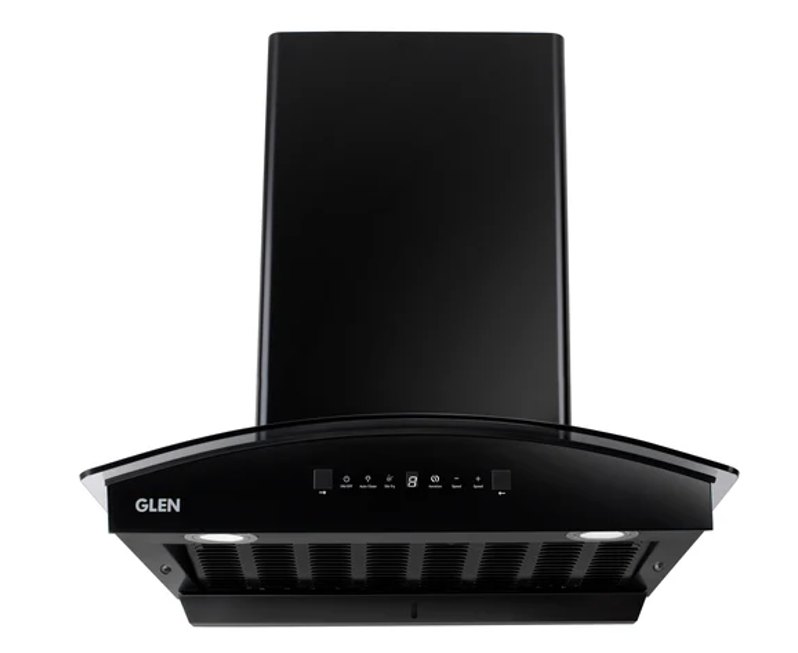

We are living in a fast-paced era where everyone is in a rush. From the kitchen to the office, every morning we need to manage things in a fast-forward way. Multiple errands often leave us in a situation where we don’t get time to take care of our kitchen’s surroundings. Culinary habits are shifting in the current scenario, where everything is tech-based, such as chimneys, automatic chulhas, dishwashers etcetera.
With the great evolution of technology, our traditional kitchen has evolved to a modern one. The addition of an automatic chimney is something that households must consider if they want their kitchen to be neat and tidy.
Unlike traditional exhaust fans, automatic chimneys are engineered to capture smoke and other spicy smells to maintain the indoor quality of your open kitchen.
But the question arises when we head toward choosing the right one for our kitchen. No worries! Dive through this guide to deeply understand the factors that you must consider while choosing an automatic chimney, price and performance-wise.
Understanding Automatic Chimney Cleaning Technology
An automatic cleaning technology is the USP of automatic chimneys. Before we understand the price and performance of chimneys, let’s understand the engineering behind the automatic cleaning technology.
While in the manual chimneys, you might need to remove and scrub filters every two weeks, an automatic cleaning technology uses a heating element to melt the oil and grease collected inside the chimney during high-frying and smoky cooking in the Indian kitchen.
Performance:
- Automatic chimneys turn out to be more long-lasting than traditional chimneys due to their internal parts remaining cleaner, and the motor lasts longer.
- Suction power remains consistent over time because the pathway for air is not blocked by solidified grease.
Price:
Automatic chimney price might be more costly than the manual ones. However, if you compare the cost of cleaning, including your time and extra money to pay for motor repairing, the automatic chimneys are a long-term investment.
Suction Capacity: The Engine of Performance
Cubic meters per hour (m³/hr) is the unit of measurement for suction power. Perhaps the most important performance metric is this one. Your cooking style and the size of your kitchen will determine the optimal suction capacity.
For Light Cooking: 700 to 1000 m³/hr
For heavy cooking such as frying, grilling, and tadka: 1200 to 1500 m³/hr.
Price:
The most costly part of a chimney is the motor. The cost rises in tandem with the suction capacity. In order to ensure better performance during heavy-duty Indian cooking, high-suction motors are frequently constructed with copper windings and thermal overload protectors, which increase their cost.
Baffle vs. Filterless Filter Technology
In the realm of automatic chimneys, the choice usually boils down to Baffle filters or Filterless technology.
Baffle Filters:
These consist of curved panels that create a cut-and-chop effect on the air. When smoke passes through, the heavy oil particles are separated and deposited on the baffles.
- Pros: Extremely durable and great for heavy oil usage.
- Cons: Requires occasional washing (though less frequently than mesh filters).
Filterless Technology:
Filterless chimneys are the peak of automatic convenience. They use a high-speed blower to push smoke directly toward the outlet, while a heating element performs the auto-clean function.
- Pros: Zero maintenance of filters; no obstruction to suction.
- Cons: Slightly more expensive than baffle filter models.
Price vs. Performance:
Filterless models offer superior airflow performance because there is no physical barrier (filter) blocking the air. If you want a fit-and-forget solution, the slightly higher price of a filterless automatic chimney is justified.
See also: Inspirational Jewelry: Meaningful Pieces That Tell a Story
Size and Design
The size of the chimney must be proportionate to your stove and your kitchen layout.
Standard sizes of the chimneys are 60 cm and 90 cm.
- 60 cm: Ideal for 2-3 burner stoves.
- 90 cm: Ideal for 3-5 burner stoves. A chimney should always be slightly wider than or equal to the width of the cooktop to ensure that no smoke escapes from the sides.
Price:
Larger chimneys (90 cm) are more expensive due to the increased material (glass and steel) and the larger hood area. Additionally, the design, whether it is a T-shape, Curved Glass, or Inclined (Vertical), affects the price. Inclined chimneys are currently the premium choice, offering a modern look and better headroom while cooking.
The Silent Performance Factor
Buyers overlook noise levels until the chimney is installed. A loud chimney can make the cooking experience stressful.
Most automatic chimneys operate between 50dB and 65dB. Advanced models use brushless DC (BLDC) motors or better-insulated blowers to reduce noise.
- Inverter/BLDC Motors: These are significantly quieter and more energy-efficient.
Price:
Silent technology comes at a premium. If you have an open-concept kitchen or prefer a quiet environment, investing more in a low-noise, BLDC-powered automatic chimney is a wise performance-based decision.
Motion Sensors and Touch Control
Modern automatic chimneys have moved away from mechanical buttons.
- Touch Controls: Sleek and easy to wipe clean.
- Motion Sensors: Allow you to turn the chimney on or adjust speeds with a wave of your hand.
Price:
While these features add to the cool factor, they also add to the price. However, from a performance standpoint, touch and sensor controls are often more durable than mechanical buttons, which can get stuck over time due to grease ingress.
The Ducting Factor
Performance and cost are greatly impacted by the choice of ducted or ductless (recycling) chimney.
- Ducted (Best Performance): The house’s smoke is expelled. A PVC pipe is needed for this. It is the best method for eliminating heat and smells.
- Ductless (Convenience): Purifies air using carbon filters before reintroducing it into the kitchen.
Price:
Ducting saves money on frequent carbon filter repairs, but it does come with installation and piping costs.
Analyzing the Price-to-Performance Ratio
Discounts can easily divert one’s attention when shopping. Rather, pay attention to the value per year.
- Entry-level automatic chimneys typically have a suction of 1000–1100 m³/hr and a simple auto-clean feature. Small families or those with modest culinary needs will love these.
- Mid-Range automatic chimneys provide motion sensors, improved construction quality, and suction of 1200–1350 m³/hr. The “sweet spot” for the majority of urban households is this.
- High-end automatic chimneys have BLDC motors, suction of more than 1500 m³/hr, incredibly little noise, and elegant designs. These are for people who desire the best kitchen technology available.
Installation and After-Sales Service
A chimney is a mechanical device that requires skilled installation to work at its peak. A 1500 m³/hr suction chimney can be reduced to 1000 m³/hr by improper ducting (too many bends in the pipe). Always evaluate the brand’s service network in your city before finishing the purchase.
Conclusion
If you are searching for an automatic chimney that can withstand the rigors of Indian cooking, from heavy frying to spice-rich tadka, Glen provides a broad choice of auto-clean and filterless chimneys.
Glen Appliances is a leader in the Indian kitchen industry when it comes to the ideal balance between cost and functionality. Glen has been associated with durability, creativity, and trust for more than 20 years.
Purchasing a chimney is an investment in both your well-being and the durability of the inside of your house. By selecting Glen Appliances, you are taking home a dedication to quality and a cleaner cooking experience rather than merely purchasing a product.
Visit the official website to explore the automatic chimney price and other products to transform your kitchen.