
In custom printing and product decoration, efficiency and finish quality directly affect profitability. For years, vinyl stickers were widely used for branding, labeling, and decoration. However, many of the limitations of vinyl manual effort, color constraints, and durability issues have pushed businesses to look for better alternatives. This is where UV DTF stickers are changing standard practice.
From apparel brands and boutiques to print shops and promotional product suppliers, companies are moving toward UV DTF technology because it removes the friction points that come with vinyl while delivering a more refined result.
What Are UV DTF Stickers?
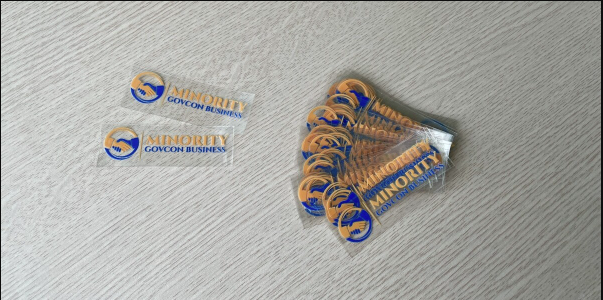
UV DTF (Direct-to-Film) stickers are produced using UV-curable inks printed onto a specialty film. The printed layer is then transferred directly to hard surfaces without heat. Unlike vinyl decals, there is no cutting or weeding. The artwork is printed as a complete design, laminated during production, and supplied ready for peel-and-apply use.
This streamlined method reduces manual work, shortens production time, and produces a professional finish that is difficult to achieve with vinyl.
1. No Cutting or Weeding
Vinyl production typically requires contour cutting and careful removal of excess material around the design. Fine text, thin lines, and complex artwork make this step slow and error-prone.
UV DTF stickers remove this stage entirely. The design prints as one unified piece, which means:
- Quicker production cycles
- No risk of damaging small details
- Accurate reproduction of intricate artwork
- Lower labor involvement
For print providers handling volume orders, this is a major operational improvement.
2. Higher Print Precision and Richer Colors
Vinyl stickers often depend on solid color films layered together for multi-color graphics. This can create thickness, alignment issues, and limited color expression.
UV DTF printing delivers:
- High-resolution image output
- Strong, vivid colors
- Smooth gradients and shading
- Crisp fine details
This level of clarity is ideal for logos, brand marks, and detailed artwork that must appear premium on finished products.
3. Compatible with a Wide Range of Surfaces
Vinyl adhesives can struggle on curved, textured, or uneven surfaces. UV DTF stickers adhere effectively to many hard materials, including:
- Glass
- Metal
- Plastic
- Wood
- Acrylic
- Ceramic
- Leather goods
- Packaging materials
This versatility is why boutiques and apparel brands use them for drinkware, boxes, accessories, and promotional merchandise.
See also: Technology and Digital Identity
4. No Heat or Specialized Equipment Needed
Some decoration methods require heat presses or strong mechanical pressure for proper adhesion. UV DTF stickers are pressure-based transfers. You position the design, press it by hand, and peel away the film.
This makes them suitable for:
- Small businesses without machinery
- Quick, on-site customization
- Retail personalization
- Rapid product branding
The application process is simple and consistent.
5. Strong Adhesion and Long-Term Durability
Vinyl edges can lift over time, particularly with washing, friction, or exposure to sunlight. UV DTF stickers are engineered for resilience. They are:
- Water-resistant
- Scratch-resistant
- UV-resistant
- Weather-tolerant
This durability makes them appropriate for bottles, tumblers, cosmetic containers, phone cases, and outdoor-use items. End customers receive products that maintain their appearance for longer.
6. Efficient for Bulk Production
Production speed is critical for B2B print operations. Vinyl handling slows output due to manual steps. UV DTF allows multiple graphics to be arranged on a single sheet using a UV DTF gangsheet builder, enabling:
- Many designs printed together
- Reduced material waste
- Faster job completion
- Lower cost per unit
This efficiency is one of the primary reasons businesses are phasing out vinyl.
7. Smoother, Professional Appearance
Vinyl often leaves noticeable edges, air bubbles, or a “sticker-like” look on the product surface. UV DTF stickers create a flatter, painted-on effect with clean edges and a refined finish. The result looks integrated with the product rather than placed on top of it.
This aesthetic difference improves perceived product quality.
8. Ideal for Branding and Packaging
Modern brands pay close attention to presentation. Custom labels are used on:
- Packaging boxes
- Gift wraps
- Thank-you cards
- Promotional inserts
UV DTF stickers allow businesses to add custom branding without ordering large quantities of pre-printed packaging. This supports short runs and print-on-demand strategies.
9. More Cost-Effective Over Time
Although vinyl materials may appear inexpensive, the labor, time, and error rate increase total production costs. UV DTF stickers reduce:
- Manual labor
- Application time
- Material waste from mistakes
- Rework caused by alignment issues
For print businesses, this leads to better margins and smoother workflows.
10. Excellent for Seasonal and Custom Products
Apparel brands and boutiques often release seasonal or limited-edition products. They need decoration methods that allow flexibility without committing to large print runs.
UV DTF stickers make it easy to:
- Produce limited editions
- Customize items quickly
- Avoid overstocking printed packaging
- Change designs without delays
This adaptability is difficult to achieve with vinyl methods.
Conclusion
The move from vinyl to UV DTF stickers is driven by practical advantages rather than trends. Faster production, improved print quality, stronger durability, and reduced labor make UV DTF a more efficient solution for modern branding and decoration needs.
For print shops, apparel brands, and boutiques, UV DTF stickers offer a reliable way to create professional, long-lasting customization without the limitations of traditional vinyl. As printing technology advances, UV DTF is becoming the new benchmark for clean, high-quality product decoration.